



Trail-Ready Suspension Insights for the 2026 Chevrolet Colorado Around Castroville, TX
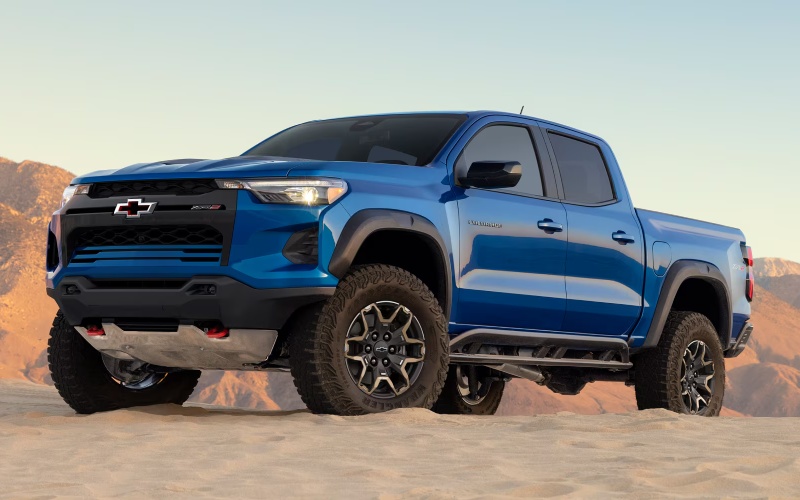
Ancira Winton Chevrolet – Trail-Ready Suspension Insights for the 2026 Chevrolet Colorado Around Castroville, TX
For many shoppers, the difference between a good midsize pickup and a great one shows up where pavement ends. The 2026 Chevrolet Colorado brings serious suspension engineering that pays off in control, comfort, and confidence, whether the day’s route includes gravel washboards, rutted two-tracks, or a badly crowned worksite lane. Understanding what each trim’s mechanical setup offers will help you pick the configuration that matches your driving reality—daily commuting, light overlanding, or weekend trail runs with a trailer in tow.
Start with the fundamentals. Colorado trims share a strong foundation, yet their suspension details vary for purpose. LT and Work Truck emphasize balanced on-road comfort. Trail Boss and Z71 add a limited-slip rear differential and more suspension travel for unimproved roads. Then the ZR2 steps up with Multimatic DSSV spool-valve dampers, power-locking front and rear differentials, and geometry designed to keep tires planted over broken terrain. The ZR2 Bison elevates ground clearance and angles further, pairs hydraulic bump stops with those DSSVs, and rolls on 35-inch tires for rock-strewn, off-camber confidence.
- LT and Work Truck: Road-focused tuning with confident damping for daily use
- Trail Boss and Z71: Added suspension travel and limited-slip rear differential
- ZR2: Multimatic DSSV dampers and power-locking front and rear differentials
- ZR2 Bison: Hydraulic bump stops, underbody protection, and 35-inch tires
Why does DSSV matter? Spool-valve dampers manage fluid flow through precisely tuned ports, which provide consistent damping across a wide temperature range and repeatable performance over continuous hits. In practice, that means fewer harsh impacts, improved tire contact on uneven surfaces, and reduced oscillation when the trail gets choppy. Pair that with locking differentials front and rear, and the ZR2 can crawl more predictably at low speed and maintain forward momentum when traction gets asymmetrical from side to side.
Of course, real adventures involve cargo and trailers. The Colorado’s strong tow ratings benefit from an integrated approach—power, chassis, and tech working together. The hitch view overlay in the backup camera simplifies solo hookups, while available 360-degree camera coverage adds another layer of awareness at the campsite or jobsite. An 8-speed automatic keeps the turbo four in its sweet spot, providing confident throttle response for merging with a trailer and coordinated downshifts when descending grades. Add in the convenience of an 11.3-inch touchscreen with Google Built-In, plus wireless Apple CarPlay and Android Auto, and the cabin becomes command central for navigation, weather, and communication during long days on the move.
What about the right choice for mixed-use—city commuting during the week, greenbelts or ranch roads on the weekend? Trail Boss or Z71 often hits the sweet spot, thanks to the limited-slip rear differential and added suspension travel without stepping into the maximum-height stance of ZR2. If your routes regularly include deep ruts, rocky shelves, or sandy wash crossings, ZR2 or ZR2 Bison provides extra clearance and the hardware to handle repeated hits calmly, limiting the bounce and brake-stab routine that can slow progress and fatigue drivers.
Frequently Asked Questions:
How should I choose between Trail Boss, Z71, and ZR2?
Think about your terrain and payload. If most miles are on pavement with occasional dirt, Trail Boss or Z71 provides a more compliant daily ride and traction upgrades for unimproved roads. If you regularly tackle technical trails or want the most controlled damping over continuous hits, ZR2’s DSSV dampers and locking differentials are worth it.
Will the ZR2 ride be too firm for daily commuting?
ZR2 tuning is purpose-built, but DSSV dampers help absorb repetitive impacts without becoming brittle. On smooth pavement, ride quality remains agreeable; on rough surfaces, the suspension shines by limiting harshness and keeping the truck settled.
Does the 360-degree camera help off-road?
Yes. Available 360-degree camera views increase awareness at low speeds—useful for tight trail squeezes, angled parking at trailheads, and lining up to obstacles. The hitch view overlay is a practical add when lining up a trailer solo.
Can I still tow confidently with an off-road-oriented trim?
Absolutely. While tow ratings vary by configuration, the turbocharged powertrain and 8-speed automatic provide smooth torque delivery, and the hitch view camera helps ensure quick, accurate hookups. Confirm your specific trim’s rating and trailer setup to match the task.
When you are ready to try different suspension setups back to back, our team can arrange a route that showcases both smooth asphalt and imperfect surfaces. Ancira Winton Chevrolet offers product specialists who speak the language of trail pressure, approach angles, and payload balance, so every recommendation is grounded in how trucks work away from the spec sheet. With one visit, you can compare damper behavior, traction strategies, and tech that simplifies trailering and route planning—then choose the configuration that truly fits your routine, weekday to weekend.
We are proudly serving Boerne, Castroville, and Selma, and look forward to helping you select the suspension and capability package that will keep your adventures moving with clarity and control.
0 comment(s) so far on Trail-Ready Suspension Insights for the 2026 Chevrolet Colorado Around Castroville, TX